
As the world’s most influential menswear platform shifts from spectacle to substance, we explore the textures and silhouettes defining the Spring 2026 executive wardrobe.
By Teresa Greco
The gravel of the Fortezza da Basso has long served as the ultimate testing ground for the modern man’s sartorial resolve. Yet, at the recent Pitti Uomo 109 and the preceding SS26 sessions in Florence, the atmosphere shifted. The era of “peacocking”—that deliberate, high-contrast spectacle designed for the camera lens—has been replaced by something far more substantial. Experts are calling it “Soft Power Dressing,” a movement that prioritizes the lived experience of the wearer over the gaze of the observer. For the Preferred reader, this transition represents a return to clothes that perform as well as they present, grounding luxury in a new architecture of ease.
Radical Softness: The New Silhouette
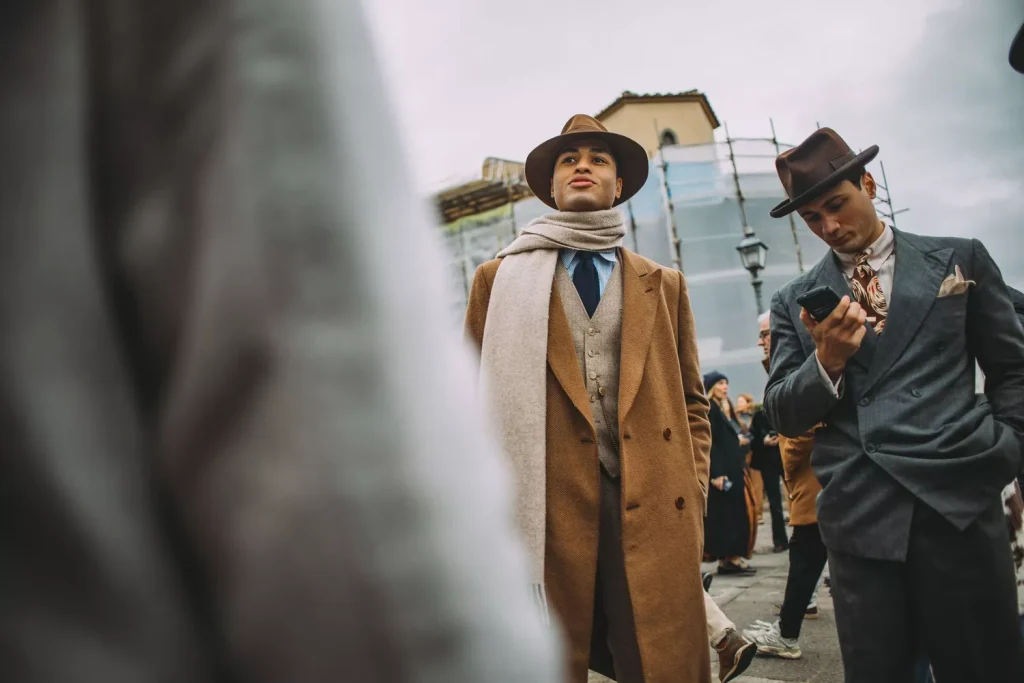
The era of hyper-slim, restrictive suits is officially over, replaced by a philosophy of radical softness. The “Soft Power” suit now mirrors the executive’s need for fluidity; jackets feature natural shoulders, known as spalla camicia, and lighter canvassing that allows the garment to wear more like a refined cardigan than rigid armour. This structural relaxation extends downward to what experts identify as the “1940s Trouser.” We are seeing a strategic return to volume, characterized by high rises, double forward pleats, and wide legs that pool with calculated nonchalance at the shoe. It is a silhouette that respects the body’s need for movement without sacrificing an ounce of authority.

The Interrupted Look: Bridging the Executive Divide
This new sense of proportion is supported by a deliberate “interrupted” look – a styling choice that reflects the blurred lines of modern professional life. It is now common to see a sharp, double-breasted navy blazer paired with bespoke denim or, increasingly, refined trousers featuring elastic-cuffed bottoms. This isn’t a lapse in standards, but rather a sophisticated mixing of formal and casual codes that acknowledges the versatility required of today’s high-performing professional. By wearing blazers and trousers separately, the modern suit adapts to the evolving needs of the day in a captivating and dynamic manner.
The Brown Renaissance: A Grounded Palette
Colour palettes have similarly matured, moving away from vibrant, attention-seeking hues toward what insiders are naming the “Brown Renaissance.” This non-colour palette relies on depth and environmental harmony rather than flash. Core tones of bitter chocolate, tobacco, slate grey, and misty greens dominated the pavilions, accented only by subtle punctuations of oatmeal, rust, or dusty pink found in fine-gauge knitwear.

The result is a wardrobe that feels grounded and permanent, favouring longevity over the seasonal trend cycle – a Canadian lens that transitions perfectly from a Tuscan afternoon to the cold of Toronto not yet forgotten.


Textural Intelligence: Materials Over Print
In this landscape, tactility is the new luxury. Visual interest is no longer driven by loud prints but by the “hand” of the fabric. High-texture materials like bouclé wools, heavy-wale corduroy, and brushed cashmere provide a sensory depth that flat fabrics lack. Furthermore, the rise of “Quiet Utility” has seen traditional heritage fabrics – waxed cottons and classic tweeds – re-engineered with technical, water-repellent finishes. For the urban traveller, this means a garment that maintains its aesthetic integrity while navigating the unpredictable humidity of a spring morning.
Deliberate Details: Humanizing the Technical
The final humanizing touch of the season lies in the deliberate details of the accessories, which bridge the gap between technicality and personality. While the tie has returned, it has been stripped of its corporate rigidity; now, it is a dandy-esque flourish – wide, textured, and often rendered in silk or heavy knit. We are also seeing a dominant styling trend in which the cashmere sweater is used as a scarf, casually draped over the shoulders or tied around the neck to soften the transition between layers. Grounding these fluid silhouettes is a shift toward low, robust boots and burnished-leather derbies, providing a sturdy foundation for an otherwise ethereal wardrobe.


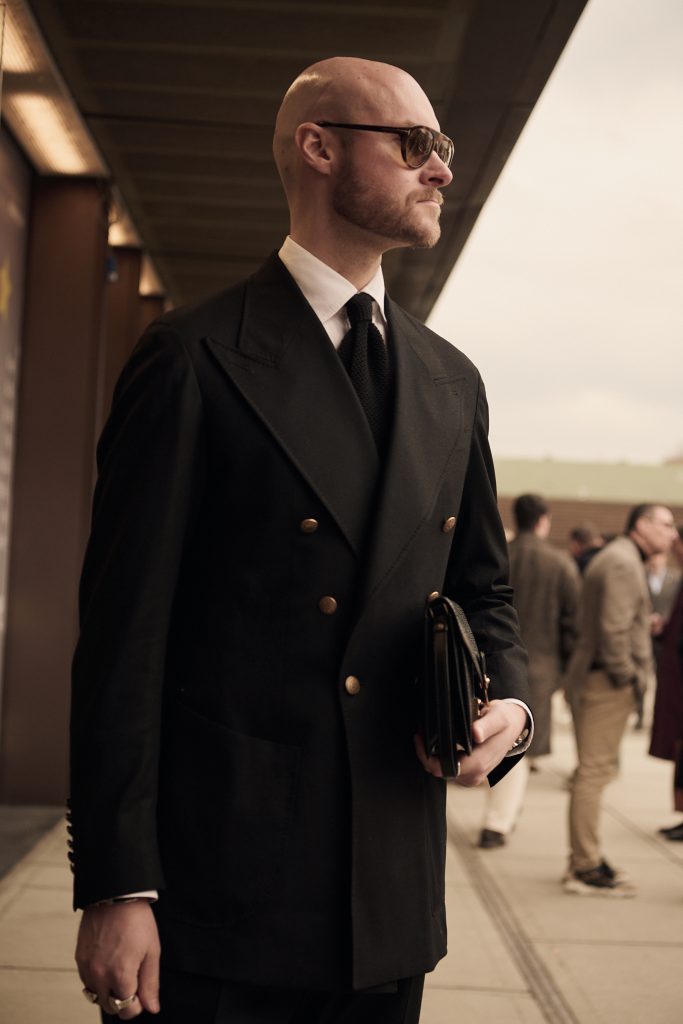
Ultimately, the message from Florence is clear: the modern man no longer needs to shout to be heard. By embracing softer structures, textural intelligence, and a grounded palette, he projects a quiet confidence. This is style as a system – one that values the comfort of the wearer as much as the precision of the cut. As we move into the spring season, the goal is not merely to be noticed, but to be remembered for a sense of ease that only true quality can provide.